


Is nature really a security issue? Making the case for nature in national security policy
Authored by
-

Timothy Clack
-

Alison Smith
-

Is nature really a security issue? Making the case for nature in national security policy
Recent News
- Explore our short documentary series: The Power of Place
- The power of place: Learning from community-led innovations in Wales
- It takes a community: reflections from the Agile Symposium 2026

Nature and biodiversity loss are not simply environmental concerns: they pose significant risks to national security. Degradation of natural systems threatens the foundations of food, water and climate security, with consequences that extend across economies, societies and geopolitical stability. Recognising these connections is essential to understanding how environmental change can shape the security of the UK and countries around the world.
In a recent expert comment for the University of Oxford, Alison Smith, Senior Research Associate at the Environmental Change Institute, and Dr Timothy Clack, Associate Professor and Director of the Climate Change & (In)Security Programme, explore why halting nature and biodiversity loss is imperative to safeguarding UK national security. Their analysis draws on research undertaken through the Agile Initiative’s nine-month Environment and National Security: Exploring the Risk Pathways Sprint, convened with the Oxford Martin School.
Understanding the connections between nature and national security
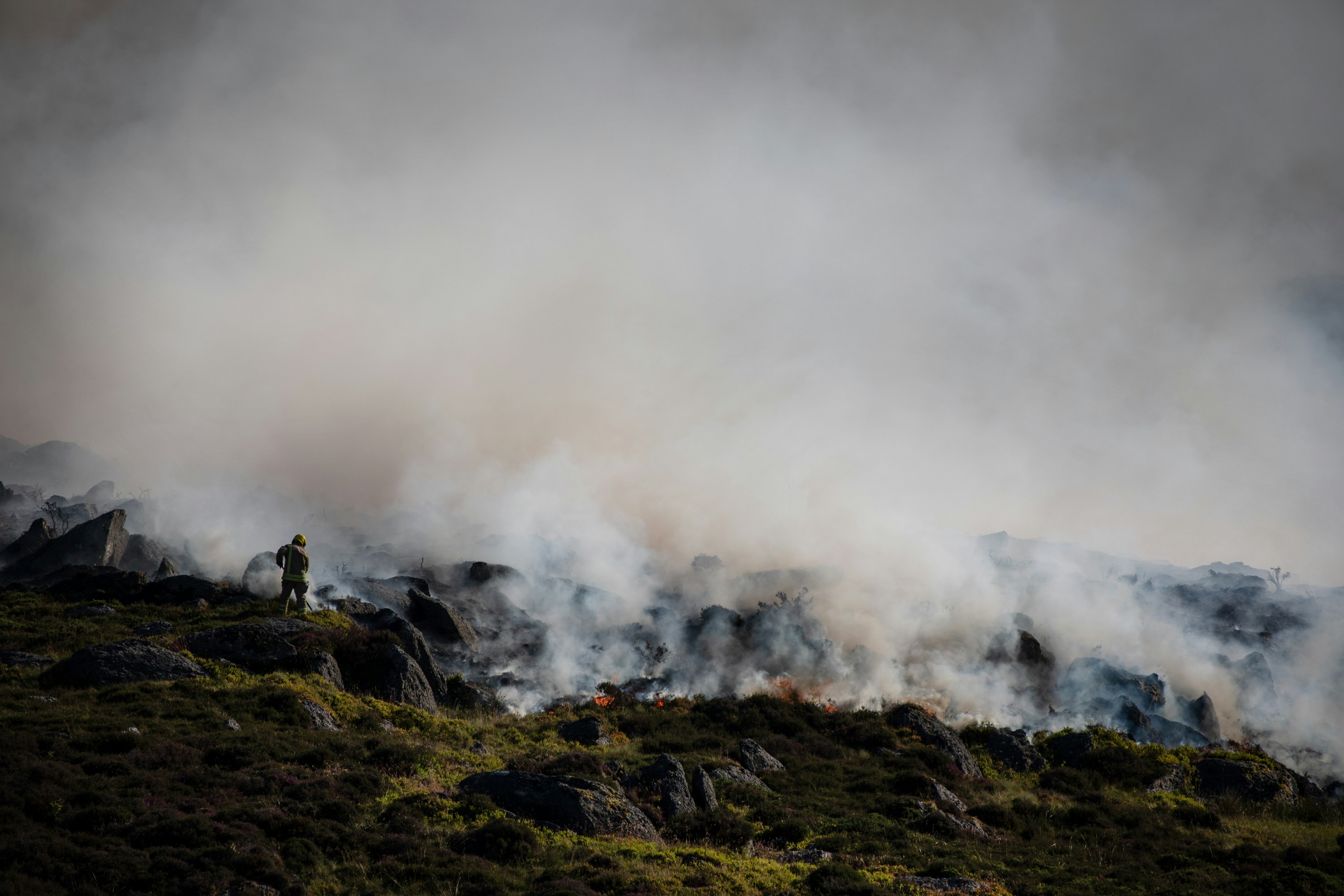
This project brought together 35 Oxford researchers and more than 60 policy officials and practitioners from 14 UK government departments, statutory bodies and military services. Through this collaboration, the team investigated how the degradation of critical natural systems can generate cascading risks to human and national security.
Findings demonstrate how the health of ecosystems, including tropical forests and ocean environments, underpins essential climate, food and water systems. For example, tropical forests play a crucial role in regulating rainfall, storing carbon and sustaining agricultural production. Their degradation can therefore have consequences far beyond the countries where deforestation takes place, affecting international food supplies, trade and economic stability.
Similarly, pressures on marine ecosystems, declining wild pollinators and damage to natural infrastructure can undermine food production and the resilience of supply chains. For the UK, which depends heavily on international trade and food imports, these environmental changes create vulnerabilities both domestically and overseas.
The research also highlights how environmental decline can contribute to geopolitical instability, competition over resources, displacement and the weaponisation of nature. These interconnected risks demonstrate why nature should be an essential component of national security thinking.
Bringing research evidence into policy discussions

A central ambition of the Agile Sprint has been to ensure that research findings inform policy discussions and help address the evidence needs of decision-makers. To this end, the project team has shared its findings with parliamentarians through the All-Party Parliamentary Group (APPG) for Climate, Nature and Security. At a session held at the House of Lords, researchers presented findings across several dimensions of environment and national security, including critical natural infrastructure, food and energy security, shipping and supply chains, the weaponisation of nature, migration and societal resilience. Read more about the team’s engagement with parliamentarians and its policy work.
The team’s policy contribution also extended to the APPG’s inquiry into climate change as a driver of migration and its implications for UK national security. Researchers, including members of the Oxford team, contributed expertise on systemic risk pathways, economic drivers of migration and the institutional, policy, humanitarian, and community responses needed to address displacement. The inquiry also brought lived experiences of displacement into the discussion, highlighting the importance of understanding the human dimensions of climate-related mobility. Find out more about the APPG inquiry and its evidence sessions.
Supporting future decision-making
Alongside this policy engagement, the project has developed a substantial evidence base to support future research and decision-making. As Tim Clack highlights in his post about the report, decision-makers need a stronger understanding of the risks arising from the climate and nature crisis. The Environment and National Security: Forward-Looking Research Agenda brings together contributions from more than 80 Oxford researchers and officials from UK government departments and multilateral organisations, identifying over 200 priority research questions across critical natural infrastructure, food and energy systems, maritime shipping and trade, environment-driven migration, the weaponisation of nature and societal resilience. It also identifies potential interventions to disrupt risk pathways, alongside communication challenges and opportunities for behavioural and institutional change.
From recognising risks to building resilience
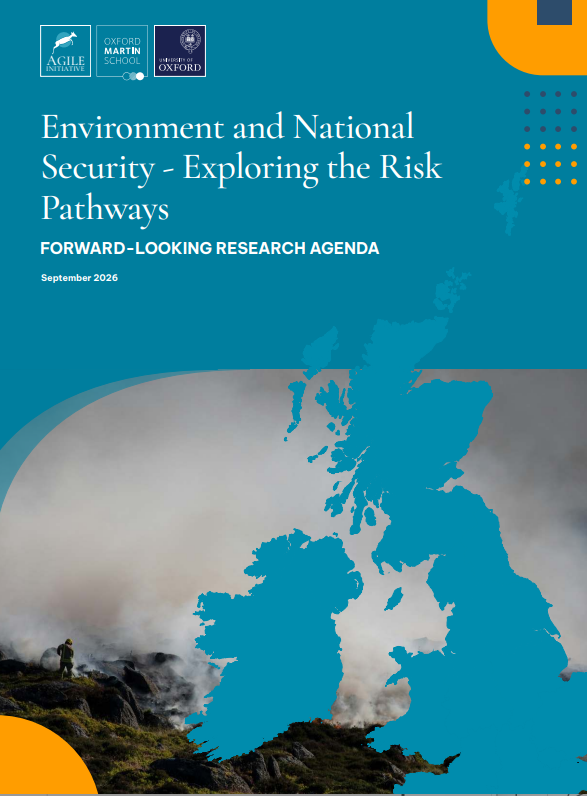
Evidence from this Agile Sprint underlines the need to move beyond traditional understandings of national security. Protecting nature is not separate from protecting people, economies and essential services; it is fundamental to all three.
The research points to the importance of protecting and restoring critical natural systems, managing demand for food, energy and water, strengthening the resilience of supply chains and investing in communities better equipped to anticipate and respond to environmental pressures.
It also highlights the importance of addressing evidence gaps and supporting closer collaboration between researchers and policymakers. Understanding how environmental risks cascade across systems, sectors and borders is essential to identifying effective interventions before disruptions become crises.
As climate and nature security feature in discussions at COP31, the Agile Initiative’s work reinforces an important message: nature is not a peripheral consideration in national security policy. It is one of its foundations. Recognising this connection and translating the evidence into action will be essential to building more resilient societies and safeguarding security in a changing world.
Explore the project: Discover the Environment and National Security: Exploring the Risk Pathways sprint and access its research reports, policy findings and forward-looking research agenda.
This article draws on an expert comment by Alison Smith and Dr Timothy Clack, originally published by the University of Oxford. The full, original version, ‘Expert Comment: Is nature really a security issue?’, can be read on the University of Oxford website.