


Outputs
On this page you will find outputs from the individual Sprints, as well as outputs from the programme-level research and learning activities. You can filter by publication type or SDG goal, or browse all our outputs starting with the most recent.
Outputs
-

ANIMATION | Doing research differently
MoreAn animation produced by Jonny Lawrence, this video sets out how Agile are doing things differently, covering interdisciplinarity, co-creation, and equality impact assessments.
-
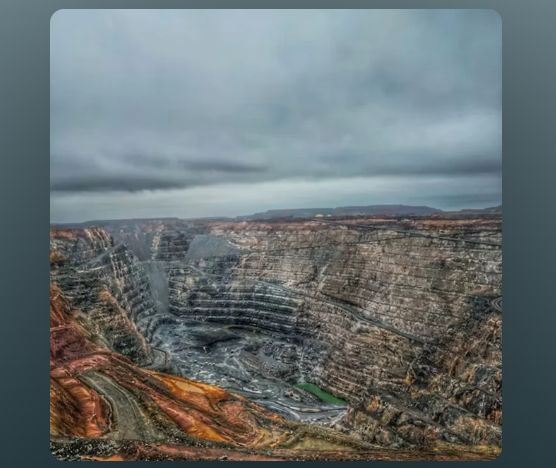
PODCAST | Managing the future of critical minerals in the UK
MoreListen to this episode from an Agile science-to-policy project to explore not just the economics or geopolitics of these materials, but the deeper human stories, political tensions, and competing visions of the future that surround them.
Associated Sprint: Science-to-policy projects (2026)
Associated SDGs: 13 Climate action, 3 Good health and well-being
-
Procurement for the Planet: Policy approaches to greening public spending
MoreThis report examines green public procurement in practice, drawing on cross-national policy tracking from the Oxford Climate Policy Monitor and over 60 interviews with procurement officials and experts worldwide.
Associated Sprint: Science-to-policy projects (2026)
Associated SDGs: 13 Climate action, 3 Good health and well-being
-
The Agile Story: An experiment in doing research differently
MoreThis brochure tells the story of the Agile Initiative – where it came from, what it has achieved to date, and what we learned about doing research differently.
-
Beyond speed: Designing science–policy collaborations that work with real-world rhythms
MoreThis brief accompanies a research paper examining how science–policy collaborations unfold in practice.
-

Environment and National Security – Exploring the Risk Pathways
MoreThis report is the central output of the Environment and National Security: Exploring the Risk Pathways project. Designed to be accessible, it provides a forward-looking research agenda for research and policy audiences.
Associated Sprint: Environment and National Security: Exploring Policy ‘Demand Signals’ and the Science Response
Associated SDGs: 10 Reduced inequalities, 11 Sustainable cities and communities, 13 Climate action, 15 Life on land, 16 Peace, justice and strong institutions, 3 Good health and well-being
-

Combate aos incendios florestais na Amazonia / Combating forest fires in the Amazon
MoreThe guide aims to support institutional and volunteer firefighters in battling blazes in rainforests that—until a few decades ago—did not burn, but now face the threat of fire due to climate change. (Language: Portuguese)
Associated Sprint: How can we fireproof the Amazon?
Associated SDGs: 11 Sustainable cities and communities, 13 Climate action, 15 Life on land
-
PRE-PRINT | Anderson Acceleration Can Ease Reliable Model Calibration
MoreIn this pre-print, the authors tackle the computational bottlenecks of calibrating global marine biogeochemical models by combining a fixed-point iteration spin-up scheme with an efficient offline ocean model and calibration algorithm, achieving roughly ten times faster spin-up and calibration.
Associated Sprint: Can we solve the “spin-up” problem in Earth System Modelling?
Associated SDGs: 13 Climate action
-
PRE-PRINT | A warm stagnant ocean leads to deep-ocean deoxygenation without widespread anoxia
MoreIn this pre-print, authors use Miocene Climatic Optimum simulations (ACCESS-ESM1.5) to show that cold initial conditions at higher pCO2 drive a stable ocean stratification, and find, via Anderson Acceleration-equilibrated biogeochemistry, no large-scale deep anoxia or hypoxia.
Associated Sprint: Can we solve the “spin-up” problem in Earth System Modelling?
Associated SDGs: 13 Climate action
-
Software for solving fixed point problems with Anderson Acceleration
MoreThis repository on GitHub contains MATLAB and Python software for solving fixed point problems using Anderson Acceleration. You can also find it on PyPI: https://pypi.org/project/aa4py
Associated Sprint: Can we solve the “spin-up” problem in Earth System Modelling?
Associated SDGs: 13 Climate action
-
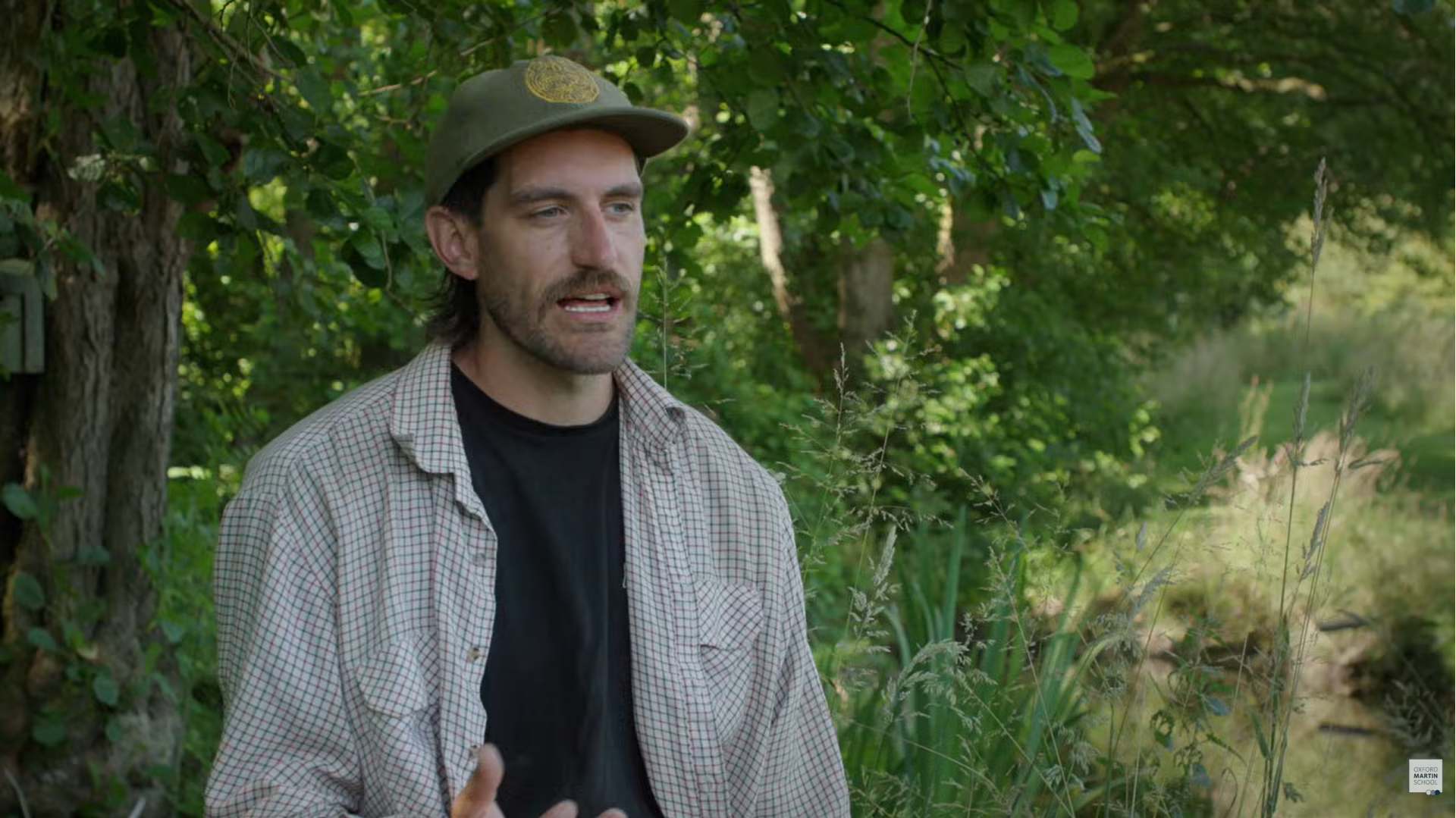
VIDEO | A vital approach for retaining water
MoreIn this preview clip from an upcoming Sprint video, Dan West from the Radnorshire Wildlife Trust highlights the critical importance of cross-catchment water management, which is a vital approach for both natural flood defence and its flip side: retaining water during severe droughts.
Associated Sprint: How can we deliver effective, equitable and place-based environmental governance?
Associated SDGs: 11 Sustainable cities and communities, 13 Climate action, 15 Life on land, 16 Peace, justice and strong institutions, 17 Partnerships for the goals, 2 Zero hunger
-
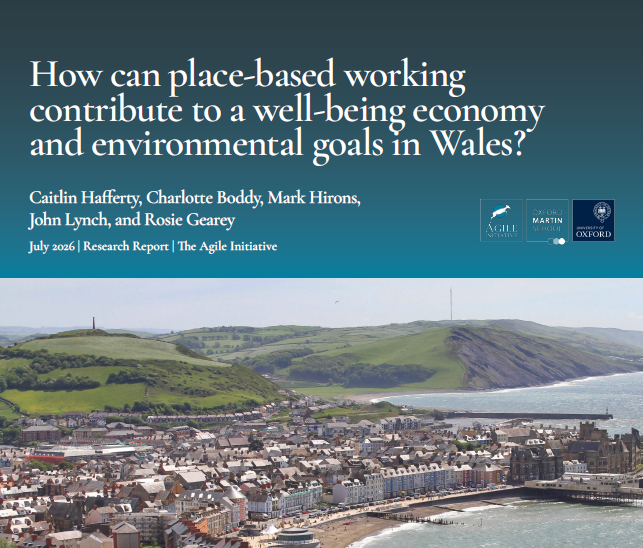
RESEARCH REPORT | How can place-based working contribute to a well-being economy and environmental goals in Wales?
MoreThis research report is written to highlight the opportunities presented by place-based governance, and how it can contribute to achieving social and environmental goals.
Associated Sprint: How can we deliver effective, equitable and place-based environmental governance?
Associated SDGs: 11 Sustainable cities and communities, 13 Climate action, 15 Life on land, 16 Peace, justice and strong institutions, 17 Partnerships for the goals, 2 Zero hunger