How can action on deforestation strengthen the UK’s food system security and resilience?
This Sprint runs from January-August 2026.
Sustainable development goals
More Sprints
- Environment and National Security: Exploring Policy ‘Demand Signals’ and the Science Response
- How can the UK improve flood resilience in the Thames Estuary?
- How can we prevent childhood sexual abuse in climate disasters?
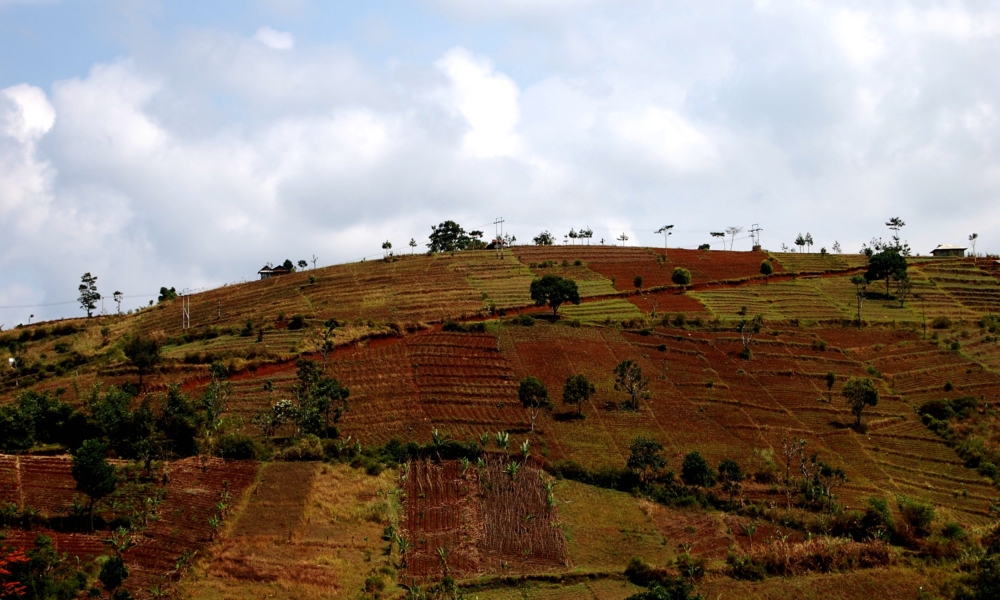
The UK’s food system is deeply connected to global ecosystems. Key commodities such as soy, cocoa, palm oil, beef, and coffee are primarily produced in regions where land-use change and forest loss are widespread. Ecosystem degradation in these landscapes, often driven by the very same agricultural expansion, can generate knock-on effects that travel through global supply chains, with implications for long-term food-system stability and resilience in importing countries.
Working closely with DEFRA, through an interdisciplinary team and combining a systematic reviews, trade analysis, and stakeholder engagement, this Sprint will explore how alternative deforestation-control pathways may affect agricultural output, trade patterns, livelihoods, and the UK’s food systems. Soy from Brazil and cocoa from Ghana will be used as case studies to examine these dynamics in practice.
Why this Sprint? Why now?
Forests are increasingly recognised as globally important ecosystems at the centre of climate, biodiversity, and development policy discussions. This has further emerged in recent international fora, such as CBD COP16 and UNFCCC COP30, where deforestation and forest restoration were recognised as critical to achieving multiple climate, nature, and social objectives.
At the same time, as an importer of forest-risk commodities, the recent UK’s National Security Assessment highlights how ecosystem degradation overseas can create risks and undermine national security through global supply chains.
Despite this growing policy attention, there is still limited evidence linking forest action in producer countries to concrete outcomes for UK food-system security and resilience. In particular, further research is needed to understand how risks propagate through global value chains, as well as the conditions that determine the effectiveness of deforestation-control policies in mitigating “cascading risks”.
The Sprint will provide preliminary insights to support these discussions and guide future analyses.