


It takes a community: reflections from the Agile Symposium 2026
Authored by



Recent News
- Explore our short documentary series: The Power of Place
- The power of place: Learning from community-led innovations in Wales
- Sprinting Students: Making the most of an Agile Sprint

Authored by: Nathalie Seddon, Rachel Hayman and John Lynch
On Monday 21st September we got to experience the Agile Initiative in all its vibrancy at our Symposium on ‘Co-creating research and policy for a changing world’, exploring what Agile has achieved and learned in less than five years with academics, funders, publishers, civil servants, practitioners and activists. It was a real testament to the effort and determination of the whole community that has made this innovative interdisciplinary programme work. We’ve captured this in some brand new outputs: the Agile Story and an animation.
Short timelines and high ambitions delivering multiple impacts
There were high levels of energy and equally high levels of positive emotion in the room as five researchers delivered flash-talks on Sprint projects on fire fighting in the Amazon, place-based governance in Wales, Net Zero education in England, environment and national security, and financing the Global Biodiversity Framework. What stood out was the diversity of impacts arising, well beyond the targeted goals for environmental policy and practice. We heard about unexpected and profound impacts arising from relationships with non-academic partners, the value of outputs such as guides, toolkits, podcasts and briefs for achieving Sprint goals, and the positive effects of this way of working on the researchers’ own careers.
Sprint teams may have been working to what some might consider crazy timelines with crazy ambitions, yet they all delivered high-quality policy-relevant research. This led us to reflect on some contradictions of the Agile Sprint model: time was constrained which created stress and pressures on all involved; but the teams had to be very focused throughout the project which meant that they achieved many of their goals in a timely way. Serendipity and luck had their parts to play, but so did the passion and drive of all the team members.
Understanding what it takes and appreciating wrap-around support
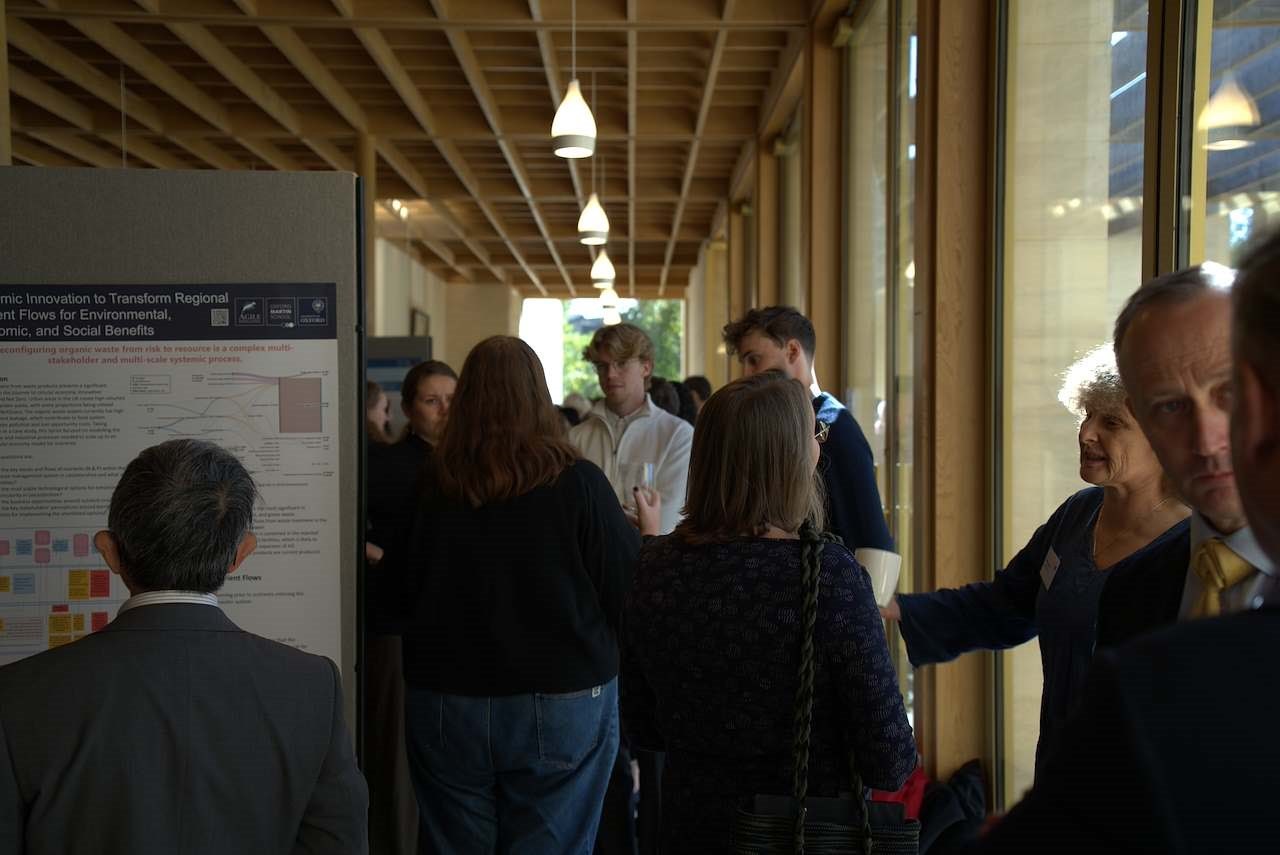
As the energy spilled out into the foyer, it was a delight to see so many teams back together again from Sprints dating from 2022 to 2026, discussing and debating their research around posters. It was also heart-warming to hear what has happened next to many of them, and realise the many ways Agile has positively shaped their careers from landing good jobs in government and other organisations, to securing posts in academia.
Agile is an unusual programme, and a topic that came up again and again was the benefit of the operational set-up. Flexible funding has been fundamental to the initiative, allowing experimentation with the Sprint model but also giving opportunities for early career researchers to lead and learn in ways that are not possible with many grant schemes. With the professional support team (Engine Room) providing advice and mentoring throughout, and a funder (NERC) that was hands-on and supportive all the way, Sprint teams were able to flex, adapt and respond to the evolving evidence needs of the policy partners.
Deep co-creation and integration
Across the day, speakers returned to the value of the deep collaboration between researchers and decisionmakers supported through the Agile model. Getting the research question right, especially framing it in a way that will translate to action, is key in achieving impactful, responsive research. Likewise, working through the interplay between evidence and policy recommendations is crucial. Several sprints demonstrated that creating space dedicated to deep co-creation pays off, making time for researchers and policy partners to get to know each other, to understand what they do and don’t have the ability to affect, and to clarify boundaries and roles so that the researchers can maintain academic independence. Yet such time and space is rarely afforded: building relationships and common understanding emerged as the two most important practical challenges associated with policy-focussed, co-created research.
This highlights another contradiction, however. One of our government partners emphasised the benefits of building trusted, long-term relationships. But they also raised the risk of these relationships calcifying, leading to a narrowing of ideas and voices providing policy input. At the same time, there will inevitably be comings and goings of individual staff members in research and partner organisations. Rather than a focus on individual relationships, a network approach to building and nurturing these relationships might be more fruitful, combining long-term stability with scope to make new connections and bring in fresh ideas.
Mobilising for systems change
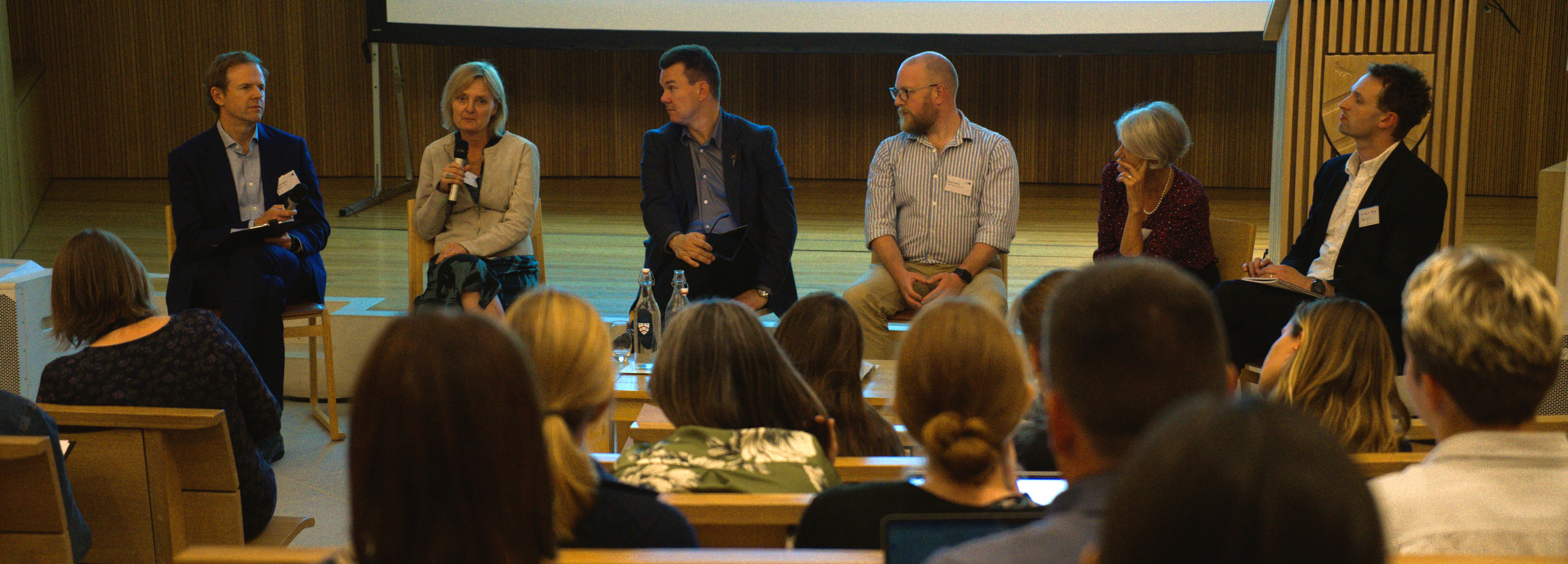
At the heart of the symposium was the drive for changes in the research system. We need to make it easier and more rewarding to do the timely, interdisciplinary, solutions-focused research that is essential if we are to tackle the escalating interdependent challenges we face.
Amidst all the buzz were some fundamental concerns. Doing an Agile Sprint often required researchers to make difficult choices between what was right for the project and what was right for their careers. While core Sprint research time was funded, the complex process of co-creation to get the research question and project design right with policy partners was not sufficiently resourced, and nor was the time after the grant ended when researchers were still working hard on outputs and academic papers. There is a growing appetite for research that can respond effectively to policy demand, yet the higher education system is not well set up to do this. Opportunities for researchers with the skills and desire for this are too rare; the rewards and recognition are poor for researchers operating outside of traditional academic norms; the outputs that are often most useful in the here and now for users are not the ones that are valued highly in academic career trajectories; administrative processes can be cumbersome and slow; and there just isn’t enough space in the standard funding system for risk-taking and experimentation.
We left with the ambition to act on this, encouraged by senior leaders from Oxford University, funders, publishing, government, and executive agencies – all people who are in a position to make change happen in the complex ecosystem in which we operate.
Acting on what we heard and learned
The day allowed us to share what we’ve learned so far, test our ideas, get feedback from a wider audience, and expand the interest in our experimental approaches, all of which is central to our programme-level research. Participants helped us examine early findings on co-creation, embedding EDI in research, the characteristics of a Sprint researcher, and the enabling environment.
Over the coming months we will consolidate the learning from the programme and assemble the evidence to support further experimentation with the Agile way of doing research, and to underpin the case for change in the system.
Read what we’ve produced so far and keep in touch to find out what comes out next.