


Researcher Spotlight: Bothaina Eltigani
Associated Sprints
Recent News
- Explore our short documentary series: The Power of Place
- The power of place: Learning from community-led innovations in Wales
- It takes a community: reflections from the Agile Symposium 2026
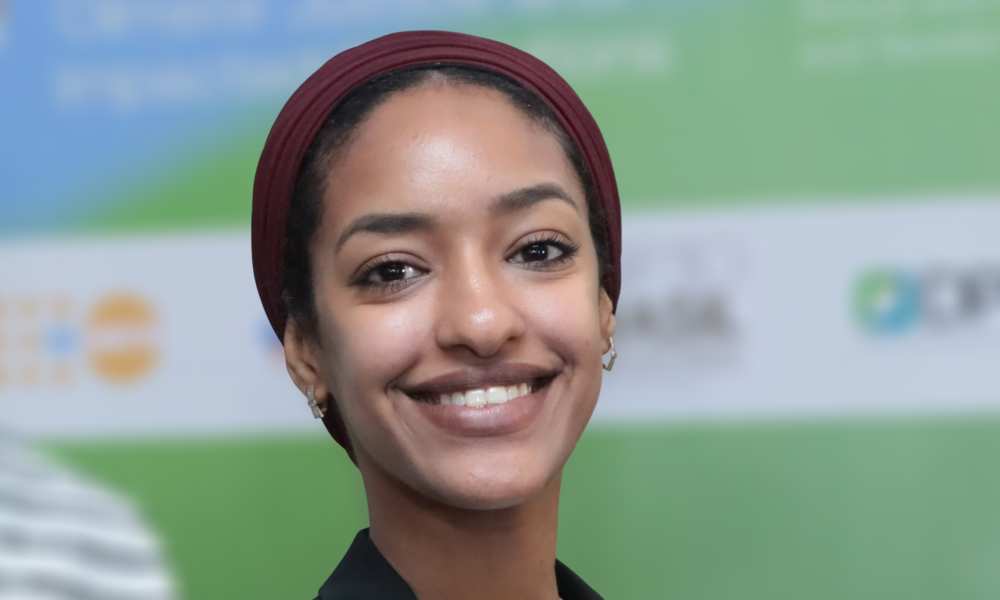
I am a final year DPhil student and have been a part-time research assistant at the Accelerate Hub for four years. Prior to this, I studied Medicine as my undergraduate degree in Khartoum, Sudan. I worked as a doctor in rural and urban areas across Sudan for three years. This experience triggered a passion for public health after witnessing first-hand how structural inequalities place certain populations at higher risk for diseases and social issues.
I also realized the importance of tackling the root cause of problems, on a broader level, rather than on an individual-level. This led me to apply for an MSc in International Health and Tropical Medicine, a course tailored to adopt global health students with critical thinking skills to identify and provide solutions for problems in low-middle income settings. My MSc thesis sought to understand who is most at risk for violence exposure among adolescent girls in Lesotho. In this project, I found that adolescent girls living in crisis-level food insecure and drought affected areas were at higher risk of experiencing sexual exploitation. I decided to build upon this evidence using high resolution data through a doctorate.
Currently, my research examines the impacts of droughts and heats on the risk of violence exposure while also exploring groups at higher risk and potential protective factors that may mitigate this risk for adolescents. I conceptualise research questions by reviewing existing evidence, and identifying knowledge gaps in the literature. I draw from established feminist ecology theories, climate vulnerability, and socioecological frameworks. Based on this, I link complex survey data with high-resolution climate data and examine associations to answer the specific research questions.
I really enjoyed working on the Agile Sprint project, ‘How can we prevent childhood sexual abuse in climate disasters?’. At first, it seemed to me that nine months was not enough to do everything we needed to do. However, our team had a bi-weekly Sprint meeting, where everyone participated in discussions around the challenges faced, sharing knowledge and expertise from our respective policy, researcher, climate scientist and leadership roles. This helped to keep the momentum going, and ensured everyone would get the help they needed, as we worked through the challenges together. Based on this experience, I would definitely want to work on a Sprint project again.
Working in a multidisciplinary team has been a formative part of the Agile experience. It meant that people not only came with different technical expertise, but also different ways of framing problems and defining solutions. While the diversity was a powerful advantage allowing us to borrow knowledge from each other, it presented with its own challenges.
For example, terminology that feels obvious in one field, it may be vague or even misleading in another. Without deliberate effort to communicate effectively, a simple gap like this can slow progress or lead to unaligned work streams. Another challenge is finding a balance between diving deep into one field, and neglecting fundamentals of the other field. For this, researchers need to step back and ensure a reasonable level of depth and work that is understandable by both audiences of both fields.
The Sprint felt fundamentally different from my previous experiences because it triggered a shift from perfection to momentum. In longer projects, I could afford to explore broadly and refine ideas over time; here, the nine-month timeline demanded early prioritization and decisive action. What mattered most for achieving goals within this timeframe was clarity of focus and continuous iteration: setting a sharply defined question, breaking it into tractable milestones, and regularly testing and adapting rather than over-planning upfront.
My biggest takeaway is how powerful constraint can be. It sharpened my ability to identify what truly matters, act quickly, and treat research as an evolving process rather than a linear path.