


Researcher Spotlight – Charlotte Boddy
Recent News
- Sprinting Students: Making the most of an Agile Sprint
- Organising research differently: lessons from an Agile Policy Sprint
- Net Zero Education Project Welcomes Teacher and Youth Representative for London Climate Action Week Session
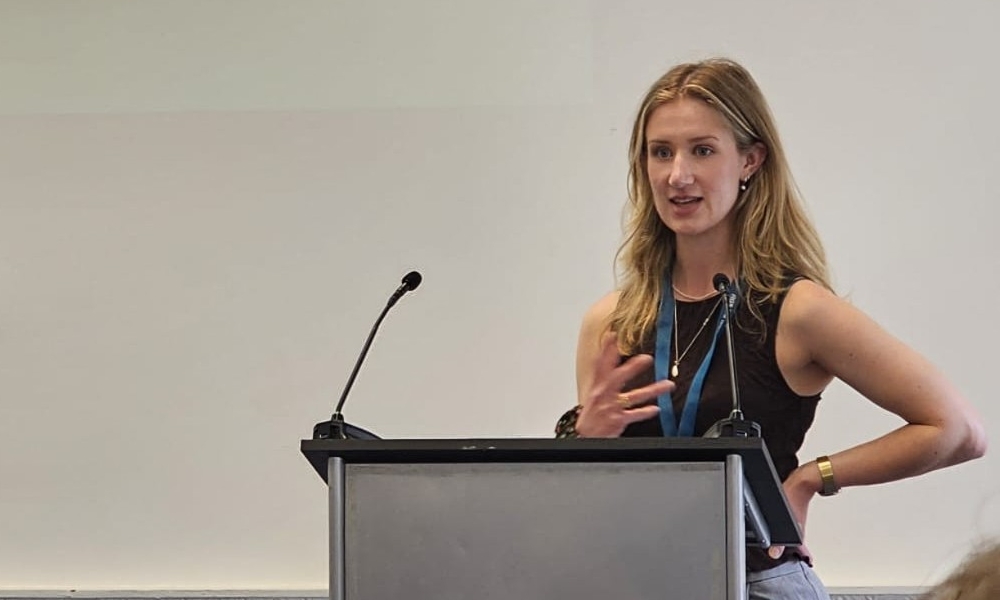
My current role is Policy Liaison Officer and Research Assistant for the Agile Sprint project ‘How can we deliver effective, equitable and place-based environmental governance?’. This follows my MSc and builds on my policy experience, working in the DEFRA’s Central Social Science Team.
Policy via academia
My BSc in Social Sciences from the University of Bath ignited a keen interest in multi-dimensional inequalities, and their relationship to social policy. Being a cross-cutting interdepartmental degree, I learned to work across multiple disciplinary backgrounds from the outset, including international development, social policy and politics.
During this degree I took a placement year with the Government Social Research Scheme, unexpectedly located within the Department for the Environment, Food and Rural Affairs (DEFRA). I had limited background knowledge of the environmental sector but hugely enjoyed working in the Central Social Science Team across programmes including the Environmental Land Management Schemes, National Food Strategy White Paper and the Soil Health Action Plan for England. This role further developed my interest in the intersection between environmental and social sciences, leading to my qualitative dissertation research on the community impacts resulting from implementation of the UK’s first inshore Highly Protected Marine Area.
A transdisciplinary trajectory
This interest in transdisciplinary work led to my subsequent MSc in Sustainable Development at the University of Exeter, in which I explored the intersections of social science with environmental governance, energy policy and food systems. My dissertation research, in collaboration with the Vincent Wildlife Trust, took a mixed-methods approach to assess long-term community perspectives regarding native species translocation.
Alongside my degrees, I have taken numerous placements within policy, private sector and ENGOs to develop my cross-sectoral understanding, including DEFRA, the pioneering Community of Arran Seabed Trust, and the RSPB’s Social Science team.
I really enjoy the knowledge exchange process and expanding my perspective through immersion in practice; and this embedded approach to knowledge exchange has been core to the co-design and policy liaison aspects of my current role.
These experiences collectively led to a sustained interest in working in the transdisciplinary space, specifically at the science-policy interface – which motivated my subsequent application to this Agile Sprint, given this alignment with the programme’s novel approach to research!
Bridging research and policy in the Agile Sprint
The Agile Sprint I am working on has been co-designed in partnership with Natural Resources Wales (NRW). My role is a dual Research Assistant and Policy Liaison position, specifically structured to facilitate highly policy-responsive research between the Oxford research team and our government partner, NRW. This dual structure means I operate simultaneously as an independent researcher and as a dedicated relational bridge between the academic and policy teams.
On the research side, I have co-led the design and fieldwork for the qualitative data collection, including over 40 cross-sectoral interviews and three regional case studies spanning hyperlocal community initiatives to national policymakers. I have subsequently led the data analysis, and I am currently leading development of the first paper arising from this project.
On the policy liaison side, I have independently led weekly engagement with NRW colleagues throughout the project, facilitating meaningful co-design at every stage — from research framing and data collection through to analysis and dissemination. The embeddedness of this project within the wider policy context has also led to significant opportunities for policy impact, including contributions to NRW’s State of Natural Resources Report, the revision of the Natural Resources Policy, and knowledge exchange with the Scottish Government and Natural England.
The Sprint experience
Working on this Sprint has been a really valuable experience, and one I would be keen to repeat. The model’s emphasis on genuine co-design from the outset, rather than policy engagement as an afterthought, aligned closely with my own perspectives about best practice approaches to research at the science-policy interface. The value of this approach was reflected in the access and insights we were offered in the policy space and the resulting value of the emergent results to both academic and policy interests.
The biggest challenge of the project was balancing the competing demands associated with the policy interest our work generated and the time required for rigorous analysis. Our Sprint’s embedded approach meant that NRW colleagues were highly invested in our findings — which was exactly the goal — but this created competing pressure to respond to numerous emergent policy engagement opportunities. Navigating this required careful judgement — identifying the most impactful engagement opportunities, protecting time for synthesis, and maintaining regular communication with partners so trust and momentum were sustained throughout.
Surrounding opportunities
Alongside the Sprint work I also took the opportunity to participate in the OPEN peer mentoring scheme and attended the Agile writing retreat. Both were valuable opportunities to reflect, connect with colleagues across other Sprints, and broadened my understanding of the current policy context. The professional development it has offered me as an early-career researcher interested in the science-policy interface has also been exceptional – including opportunities to engage with senior policymakers across the devolved nations and those at the global level through involvement in IPBES 12, due to the policy relevance of this work.
Productive friction
The biggest challenge working on an interdisciplinary Sprint was learning to translate between these diverse academic backgrounds, with epistemic and methodological approaches varying substantially, even where policy interests closely align. My biggest learning was the value of investing in team relationships, creating the conditions for open conversations where differences and points of confusion can surface early and be worked through constructively. These moments of productive friction often generated novel understandings and conceptual direction in our work. This relational dimension within your own team can be easily overlooked, but my advice for someone starting an Agile Sprint would be to invest in the relationships and open dialogue with both stakeholders and your team early — the quality of everything that follows can be highly moderated by these foundations.
Key learning
The one-year Sprint timeframe is demanding but generative — the pace is intense, but you cover significant ground quickly, almost without realising it week on week. The biggest challenge was conducting rigorous qualitative research — which demands iteration and contextual sensitivity — whilst simultaneously maintaining embedded policy engagement that could easily have been a standalone workstream. Learning to manage both in parallel was challenging but valuable, and the two strands were ultimately complimentary, generating a responsive momentum that suited the outward-looking, impact-oriented nature of the project.
My key learning is the importance of selective engagement with impact opportunities. Being so embedded in the policy context provided almost endless of opportunities for impact — far more than could realistically be pursued. For me, learning to reorient the question from “how many opportunities for impact can we meet?” to “where can we provided the highest quality impact?” was essential to delivering strong academic and policy outputs simultaneously.