


Organising research differently: lessons from an Agile Policy Sprint
Recent News
- Explore our short documentary series: The Power of Place
- The power of place: Learning from community-led innovations in Wales
- It takes a community: reflections from the Agile Symposium 2026
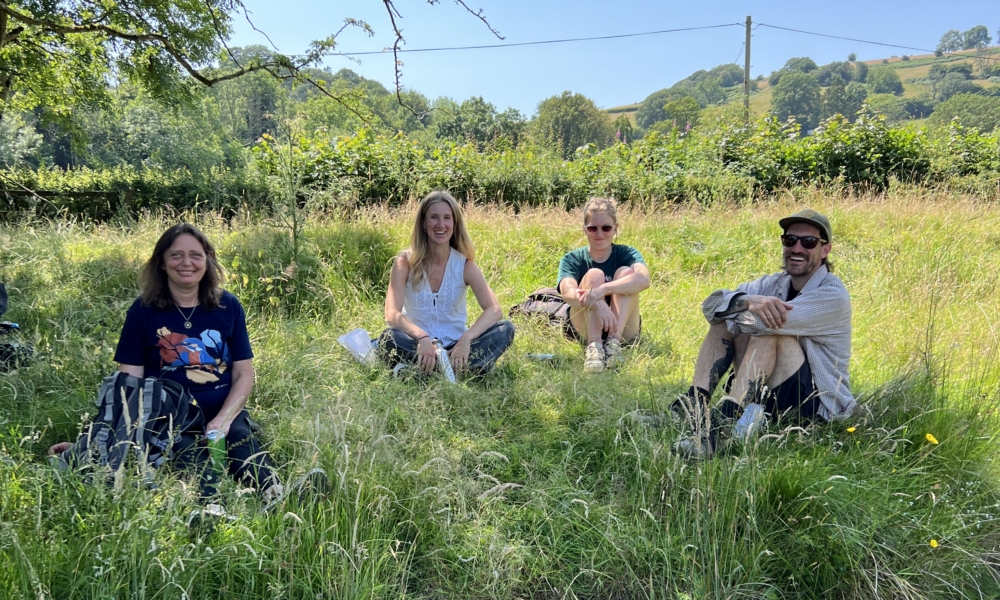
Both research and policy increasingly recognise that complex environmental challenges demand more adaptive ways of working. But what does this mean for how research itself is organised? Drawing on a year-long, policy-engaged Sprint with Natural Resources Wales, Agile Initiative researchers reflect on the research infrastructure, relationships, and diverse ways of working that can support genuine co-creation alongside live policy processes.
Introduction
Across research, government, and funding, there is growing recognition that complex societal challenges rarely unfold in predictable or linear ways. Research impact is increasingly understood as emerging through ongoing relationships and interactions, with the REF2029 acknowledging that real-world impacts are often ‘complex, unpredictable, and serendipitous’. Meanwhile, policymakers across the UK are increasingly experimenting with more adaptive approaches to strategy, deliberation, evaluation, and decision-making under uncertainty, reflected in evolving practices across the devolved governments and also recent updates to HM Treasury’s Magenta Book (the UK government’s guide on policy evaluation) on agile ‘test-and-learn’ approaches.
As research and policy increasingly embrace more iterative, relational, and adaptive ways of working, our Agile Initiative project asked: how should research itself be organised? If both impact and policymaking are understood to evolve through experimentation, learning, and collaboration, can research continue to rely on fixed questions, predefined outputs, and linear pathways to impact? How do we conduct research alongside live policy processes where neither the questions nor the solutions are fully known in advance? And what kinds of research infrastructure are needed to support this way of working?
The Agile Initiative aims to experiment with precisely these questions. Bringing together academics and policymakers through year-long ‘Sprints’, it creates space to co-create evidence around live policy challenges while allowing research and policy to evolve together. Our Sprint with Natural Resources Wales explored not only the future of place-based environmental governance in Wales, but also what it means to design research that can evolve alongside live policy processes.
‘The Agile Initiative is an experiment in organising research differently. By attempting to create the conditions for researchers and policymakers to frame problems together, adapt as new evidence emerges, and learn alongside one another, we’re also learning about new ways of doing, and ultimately evaluating, policy-engaged research’ – Mark Hirons, Sprint Co-Lead and Principal Investigator.
Lessons learned from our ‘Sprint’ approach
Lesson 1: Design research around live policy challenges – not fixed research questions
The Sprint began when Natural Resources Wales (NRW) approached the Agile Initiative with a live and ambiguous policy challenge. The research centred on Area Statements – Wales’ place-based framework, developed under the pioneering Well-being of Future Generations (Wales) Act 2015 and Environment (Wales) Act 2016, to translate national ambitions for nature, wellbeing, and resilient communities into action on the ground. At the time, organisational change, leadership transitions, and resource pressures had created uncertainty about the future of Area Statements, and planned policy revisions in 2026/27 created a more urgent need for evidence on ‘what works’.
As Luke Maggs, Lead Operational Research Specialist at NRW reflected:
‘There was a real sense of uncertainty. There had been changes in leadership, funding pressures, and a growing feeling that place-based working was becoming something people were trying to do on top of everything else. There was a real risk that Area Statements could simply drift into a hiatus.’
Different parts of the organisation held different views about the purpose and future of Area Statements, and the evidence needed to inform those decisions. In other words, there were diverse understandings of both the problem itself, and therefore the solutions and evidence needed. Instead of waiting for clarity before beginning the research, we deliberately designed the Sprint to work within this ambiguity; our underpinning theory, research questions, methods, and outputs were treated as evolving rather than fixed, adapting continuously as new evidence emerged and policy discussions developed. This enabled the research team to act as a critical friend to policy partners, informing live discussions about the future of Area Statements while remaining responsive to new questions and emerging debates.
From an academic perspective, this also created a unique opportunity. Through embedded observation, interviews, and continual Policy Liaison discussions, we observed – in real time and in all its intricacies – how discretionary action, collaboration and knowledge translation unfolded during organisational and political change. These insights weren’t just our findings, and our policy engagement activities weren’t just for better delivering impact. The Sprint created continual formal and informal feedback loops between theory, empirical research, policy dialogue and practice, with each continually reshaping the others throughout the life of the project. For example, early on in the project, emerging evidence and policy dialogue prompted us to revisit our theoretical framework, reinterpret existing data, and iteratively refine both our academic and policy outputs. Alongside this, as policy windows opened and closed, we reframed and translated the same evidence for different audiences – from practitioners to senior leaders and incoming Ministers.
Lesson 2: Design infrastructure for continuous co-creation
One of the most important lessons from the Sprint concerned the active role that policymakers can play in evidence and knowledge co-creation. Our Policy partners were not just stakeholders, end users, or recipients of evidence, but genuine intellectual collaborators throughout the whole research process. They helped us shape the overarching framing, refine research questions, identify evidence gaps, interpret emerging findings, test ideas, and continually redirect the research as both the empirical insights and policy priorities evolved.
This continuous co-creation depended on deliberate infrastructure designed to sustain collaboration throughout the project. A dedicated Policy Liaison role, undertaken by Research Assistant Charlotte Boddy, acted as a bridge between academic and policy settings, translating research, coordinating dialogue, and facilitating rapid knowledge exchange. As Charlotte reflected:
‘I led weekly engagement with NRW colleagues throughout the project… Much of the collaboration happened through ongoing conversations rather than formal meetings alone. We were continually testing ideas, interpreting our emerging findings, sharing reflections, and thinking through problems together as the policy context evolved.’
These regular interactions helped to build trust, gave the team a nuanced understanding of rapidly changing organisational dynamics, and enabled researchers and policymakers to explore evolving problems before the evidence was complete or solutions were fully formed. They also opened access to politically sensitive discussions and internal debates that would have otherwise been difficult to capture, very actively embedding the research within everyday policy conversations rather than sitting alongside them.
‘Some of the most valuable moments in the project happened in the informal ‘in-between’ spaces. They created protected opportunities for open-ended experimentation, thinking things through together, and exploring new ideas without the immediate pressure to justify them or translate every conversation into a visible project output or measurable impact.’ – Caitlin Hafferty, Sprint Co-Lead
Lesson 3: Recognise and evaluate impact as an emergent process
Designing research differently also changed how impact emerged and accumulated iteratively throughout the research process itself. As relationships deepened with our policy partners, evidence was continually synthesised and shared, and researchers and policymakers jointly interpreted the emerging findings. This iterative exchange meant that the research progressively reshaped policy discussions, while developments within the policy process simultaneously reshaped the research.
Some of these impacts were readily visible through conventional evaluation. Emerging evidence challenged the prevailing narrative that Area Statements had failed, instead supporting a strengthened delivery model. This informed the State of Natural Resources Report (SoNaRR), shaped an Executive Team workshop that led to a redesigned hybrid model for ‘Area Statements 2.0’, and helped avoid a year-long hiatus in policy development during organisational uncertainty. In one of our impact evaluation meetings, Richard Cardwell, Integrated Evidence Manager, NRW stated: ‘The outputs from this work will underpin the next round of Area Statements and environmental governance discussions over the next five years. The research helped us reimagine what Area Statements could be used for’.
However, we rapidly recognised that these visible policy outcomes only told part of the story. Many of the Sprint’s most significant impacts were relational, cultural, and institutional, emerging gradually through the iterative co-evolution of research and policy rather than as discrete project outputs. Because these changes were often difficult to recognise or quantify, we complemented formal reporting with an informal reflective session—the ‘Impact Party’—where researchers and policy partners asked What changed that we didn’t plan for? What emerged that we didn’t readily see happening? One particularly striking example emerged through the research interviews themselves. Although initially designed by the research team to generate empirical evidence, they also became spaces where Welsh Government colleagues revisited stalled conversations and reconnected across organisational boundaries. As Luke Maggs reflected during the Impact Party:
‘What’s been most interesting for me is how much this project has helped people feel like they’re part of something again. There’s been a real shift from people firefighting on their own or feeling quite isolated, towards a sense that there’s still a genuine coalition of people who care about place-based working and are trying to move it forwards. That’s the power of networks. That’s difficult to quantify, but it really matters.’
Final reflections
Our Sprint suggests that recognising research and policymaking as iterative and uncertain is only the first step. The next challenge is to create and sustain the conditions for them to genuinely work in these ways. Arguably, this raises important questions for funders and institutions: who supports the co-creation phase before problems are fully understood? How do we create space for uncertainty, continual learning, and relationship building? How can we better support theory and practice to co-evolve throughout research and/or policy processes, rather than treating them as separate stages or parallel activities? And, recognising that our Sprint benefitted from dedicated time, infrastructure, and institutional support, how do we make these approaches genuinely accessible beyond well-resourced programmes like Agile?
Then, perhaps most importantly, how do we ensure that doing research differently does not become a privilege reserved for well-resourced projects? How can researchers working under increasing precarity be supported to embed these collaborative, experimental approaches – and, in turn, draw on them to prepare their students for careers that demand continual learning and working under uncertainty?
Looking back, the biggest contribution our Sprint made was genuinely creating the space for researchers and policymakers to think, learn, and adapt together while both the research and policy context were still unfolding. Our outputs – papers, reports, briefings – were then woven into, and evolved throughout, this process. Our impacts were diverse, with one policy partner describing the project as helping people ‘feel like they’re part of something again’ – capturing something that we might otherwise have overlooked. Alongside robust evidence-led outputs, the relationships, shared learning, and gradual shifts in understanding were valuable outcomes in their own right, and in many cases, created the conditions for more visible policy impacts and richer academic insights.
Contrary to what the name ‘Sprint’ might suggest, our experience was less about speed than about creating the conditions for research and policy to evolve together. While the Sprint’s outputs – a report, brief, papers and documentary film (produced by Kinward) – will inevitably take more fixed forms, they are already woven into the relationships and conversations that produced them. We hope they continue to shape, and be reshaped by, the discussions that follow. All our outputs will be available on the Sprint webpage in the coming months.