


Net Zero Education Project Welcomes Teacher and Youth Representative for London Climate Action Week Session
Authored by
Recent News
- Explore our short documentary series: The Power of Place
- The power of place: Learning from community-led innovations in Wales
- It takes a community: reflections from the Agile Symposium 2026
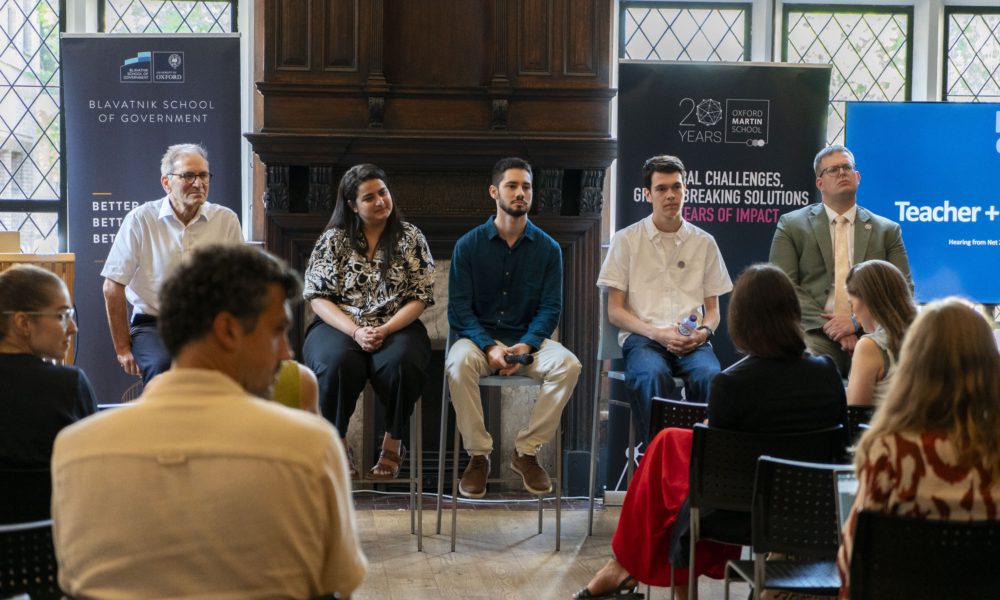
Amidst yet another heat wave roiling across the UK and Europe, the Net Zero Education Agile Sprint research team co-hosted a session during London Climate Action Week along with the Children and Climate Initiative, as part of the Oxford House series of events. The session featured panellists from both the Children and Climate Initiative, a project within the University of Oxford Blavatnik School of Government, and from the Net Zero Education research project, within the University of Oxford Department of Education. Panellists from both projects included Professor Alan Stein, Director of the Children and Climate Initiative; Leonardo Ferrera, of the International Center for Equity in Health, University of Pelotas; Ashima Gulati, Master of Public Policy alumna; Gordon Carrothers, secondary geography teacher and geography lead of The Two Counties Trust; and Leo Hawkins, sixth form student at Farmor’s School and member of the Net Zero Education Youth Advisory Board.
Presentations centred on education and action for children, youth, and climate change, drawing on global research insights from Brasil, India, and the UK. The Net Zero Education speakers highlighted existing agency of youth and teachers within schools and in public spaces to recognize the climate emergency and enact climate action towards a net zero future, but also a noticeable lack of training and accessible information for students and teachers about net zero. Net zero refers to the scientific concept of reaching net zero greenhouse gas emissions (those that cause anthropogenic climate change) by drastically and urgently reducing emissions and by increasing sequestration of emissions through natural and engineered solutions to stop global warming. It’s a bold goal, and one that is missing from school curricula across the UK and globally. The research team (including postdoctoral researchers Dr Amelia Farber and Dr Isobel Talks, and principal investigator, Dr Steve Puttick) and its participants and advisors, believe that teaching about net zero is both essential for reaching net zero targets in the UK and beyond, but also ethical – by giving students, who will have the most climate changed lives of any existing generation, the knowledge and tools to push for solutions to climate change like net zero.
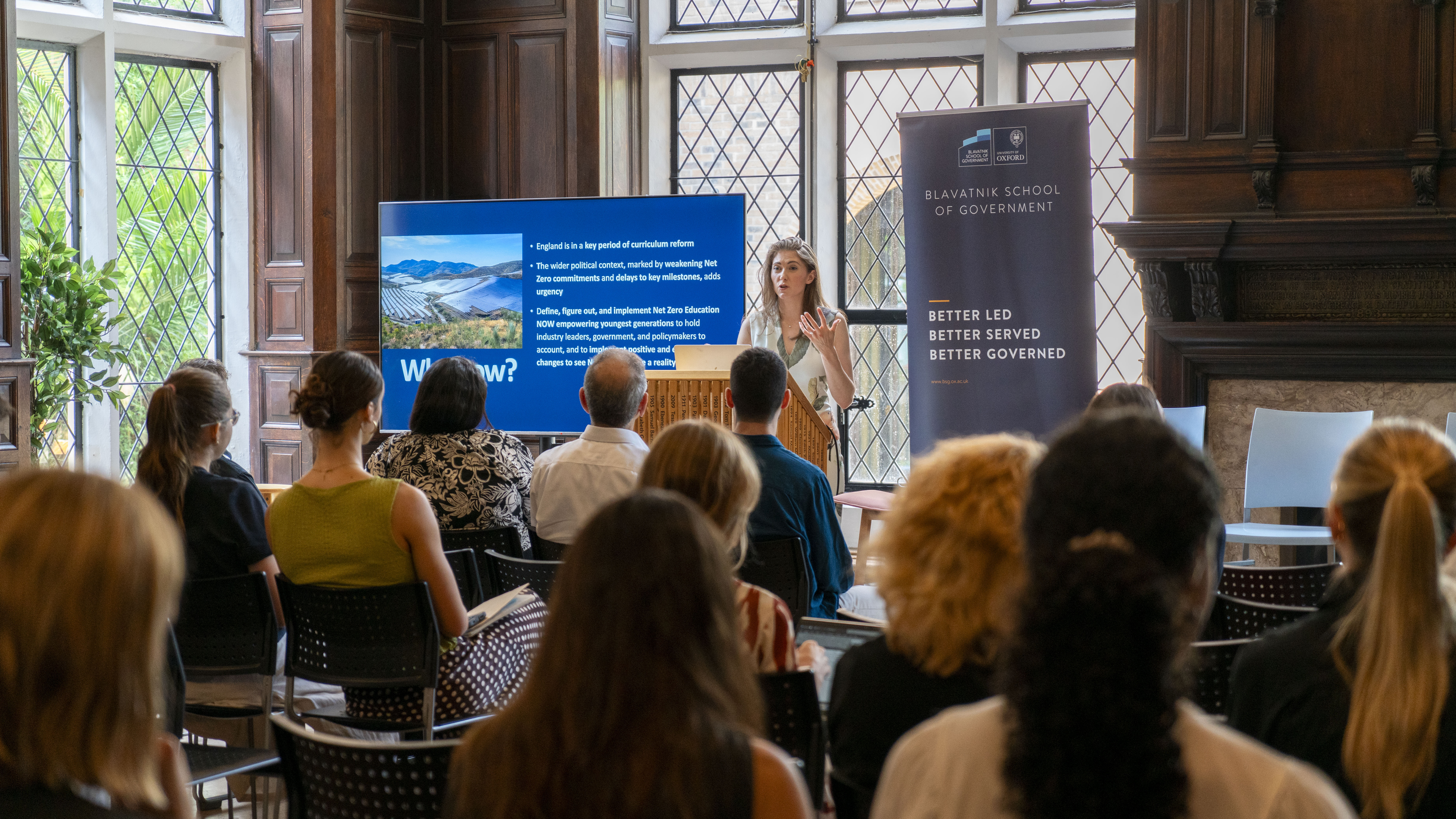
Photo by Sara Davis: Dr Amelia Farber presents the Net Zero Education research project
Dr Amelia Farber of the Net Zero Education research team noted the need to define, figure out, and implement Net Zero Education now in order to empower the youngest generations to hold industry leaders, government, and policymakers to account, and to implement positive and equitable changes to see Net Zero become a reality. She also relayed that, from the research they carried out with secondary school teachers across England, and with the project’s Youth Advisory Board, both teachers and students want to learn about net zero.
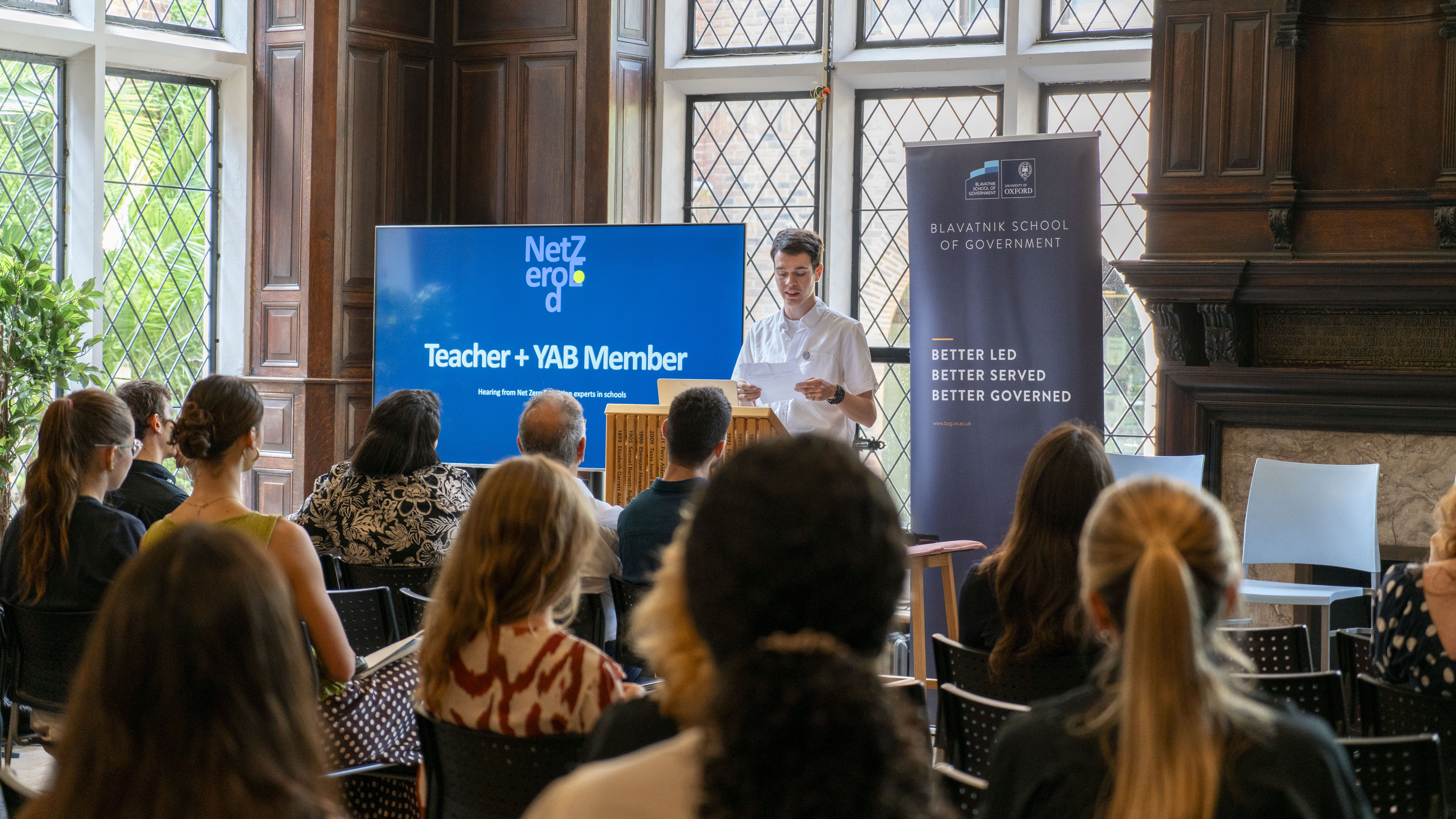
Photo by Sara Davis: Leo Hawkins speaks of the importance of supporting teachers and students to learn about and help to reach net zero
Leo Hawkins, a sixth form student from Gloucestershire, and a member of the Youth Advisory Board (YAB) for the Net Zero Education project, a group of 25 sixth form students from across England, noted that if we achieve net zero, we’ll have a world that is modern, fit for the future, safe for everyone who lives here, and we’ll have more life to live, may that be animals, may that be plants or may that be people. Although from the research we learned that teachers are either fearful of teaching for the lack of information, the lack of resources, and also from the responsibility for legal neutrality – that net zero is a hot potato with parties arguing against it. But we must teach it to future proof education.
Hawkins also highlighted the work that the Net Zero YAB has done including creating three blog posts highlighting what students learn about net zero, ‘why we should teach it, the prescience of it, and how we should teach it. And the main thing we came back with on how to teach it was active participation,’ reminding of the importance of inclusion of youth in the move towards net zero.
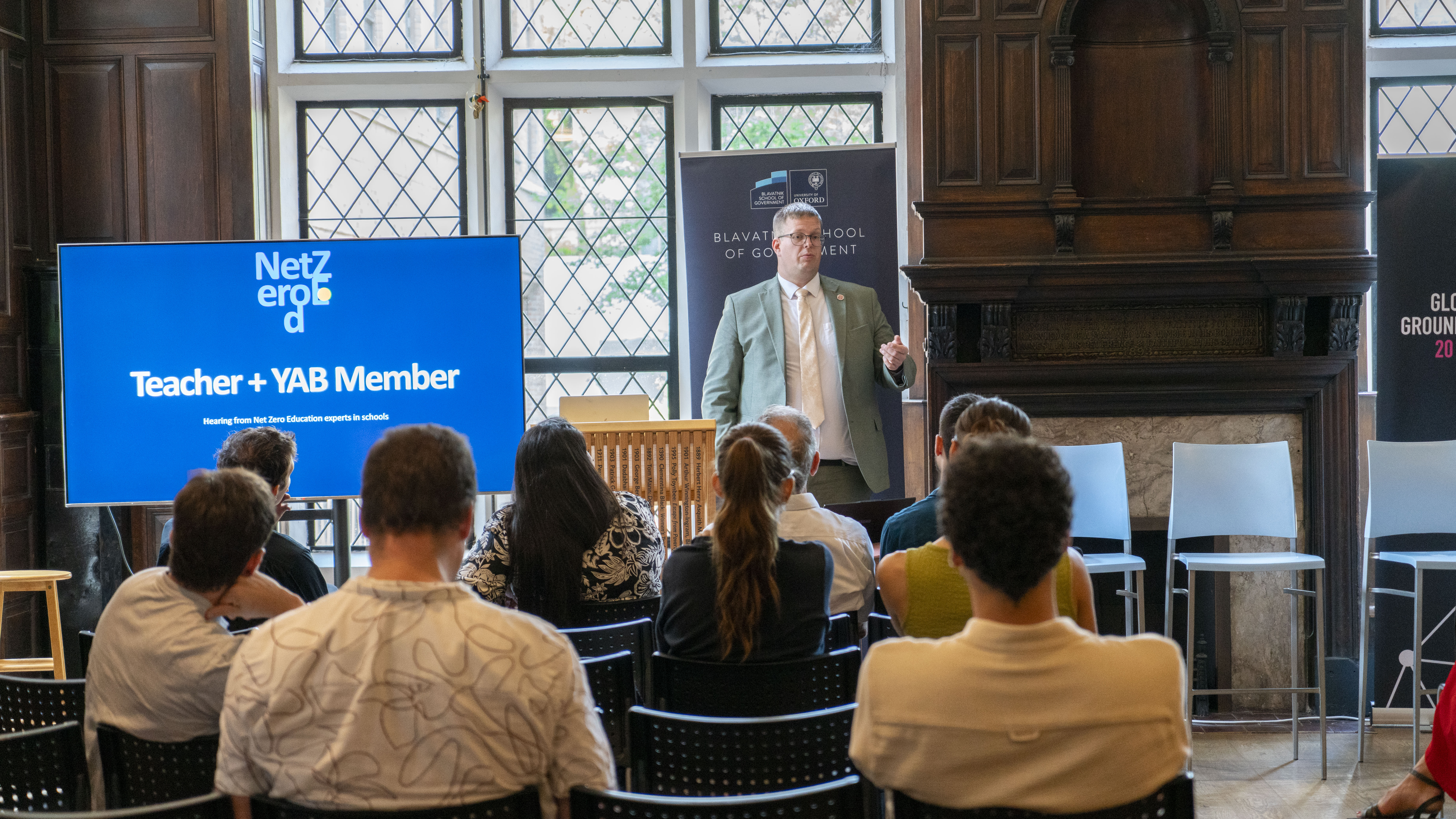
Photo by Sara Davis: Gordon Carrothers speaks about teaching about net zero and climate change
Gordon Carrothers, speaking as a secondary geography teacher and Multi-Academy Trust lead for geography across 10 schools in Nottinghamshire, noted that ‘despite the lack of representation in the national curriculum, children across the UK are increasingly worried about climate change and our climate’ and that:
“There are a growing number of students who feel they are powerless and unable to make a difference […] Young people are concerned, they are worried, and they are interested in climate change and it’s up to our generation to prepare these children, the future leaders and decision makers in the world, to realize that yes climate change exists, we are in an emergency, but we can do something about it.”
The panellists across both projects were encouraged by the insistence of youth and children globally to act on climate change, to mitigate the impairments and harm that climate change has and will continue to have on their lives. They also noted that children do not bear responsibility for the climate crisis, that it has been generations of adults over the past 50 years who have failed to act sufficiently to mitigate human caused climate change driven primarily by the burning of fossil fuels. They noted the need for adults to step up to not shield children from knowledge of climate change, but to work for and with children globally to urgently mitigate climate change harm and adapt to a climate changing world, by reaching for a global goal of net zero emissions.
To learn more about these projects, you can follow them both on LinkedIn at NetZero Ed and Children and Climate Initiative, and via the Net Zero Education and Children and Climate Initiative project pages. If you’d like to get in touch, please email amelia.farber@education.ox.ac.uk